Waterloo Catholic District School Board Logo

About wcdsbadmin

This author has not yet filled in any details.
So far wcdsbadmin has created 925 blog entries.

Middle Years Development Instrument Survey Results

How School Climate Surveys Can Help WCDSB Prioritize Student Success 

At the Waterloo Catholic District School Board (WCDSB), student success is at the heart of everything we do. We believe that students thrive when they are nurtured in safe, inclusive, and supportive environments. In alignment with provincial guidelines, the WCDSB regularly seeks input from students about their school experiences. This survey coincides with the Ministry of Education’s requirement for Ontario school boards to administer School Climate Surveys every two years to students, parents/guardians, and staff. These surveys provide valuable insights into the student experience and anonymously help us assess the overall culture within our schools.  

Introducing the Middle Years Development Instrument (MDI) 

The MDI is a unique self-report questionnaire that engages students from Grades 4 to 12, asking them about their thoughts, feelings, and experiences both in school and within the broader community. Designed to offer a comprehensive view of how children are doing in key areas of their lives, the MDI focuses on five critical dimensions of development: 

  • Social and Emotional Development 
  • Physical Health and Well-Being 
  • Connectedness 
  • Use of Out-of-School Time 
  • School Experiences 

These dimensions are closely connected to overall well-being, health, and academic success. By focusing on these areas, the MDI helps identify strengths and areas for improvement within the school environment.  

Children’s voices are vital. The MDI is founded on the belief that children deserve to be heard, and their input should inform the environments they live in. By asking them about their feelings, relationships, and daily lives, we gain valuable insights into their well-being that might otherwise go unnoticed. This firsthand information helps guide evidence-based decisions, shaping programs, practices, funding, and policies that promote children’s social and emotional health. 

It’s important to note that the MDI does not assess individual children. Instead, it offers a snapshot of how groups of students are faring across important areas of development in both school and community settings. The MDI serves as a tool for exploring how communities support children and is meant to spark conversation, rather than act as a definitive assessment tool. 

Exploring How the WCDSB Utilizes the Middle Years Development Instrument (MDI) 

At the WCDSB, we utilize tools such as the Middle Years Development Instrument (MDI) not as a means to rank schools, but to amplify student voices, ensuring that each school has the supports necessary to foster student well-being and success.  

The insights gathered from the MDI allow us to tailor our approach to meet the unique needs of each school community. Developed to address the lack of population-level data on the health and well-being of children in middle childhood, the MDI goes beyond academic performance by giving children a voice and an opportunity to share their experiences both inside and outside of school.  

This focus on the ‘whole child’ enables us to better understand and support their social, emotional, and physical development. Moreover, we collaborate with community partners to address these needs, ensuring that our students have access to a broad range of resources and support systems that contribute to their holistic development. 

Understanding the MDI Results 

MDI results are used to track trends at a population level, such as within a school or district, rather than providing individual assessments. Each school’s results are reviewed independently, recognizing that each community has its unique strengths and challenges. District-wide results are also examined to better understand broader trends and opportunities for growth. 

Releasing MDI Survey Results 

The 2024 MDI survey results at the school level will be released on each school website on September 16, 2024, and will be available at the Board level (by division, by race, and gender) on our About Us webpage. 

For further information, please contact communications@wcdsb.ca. 

September 13th, 2024|

Beyond the Screen

Written by: Evy Ayers, Grade 12, Monsignor Doyle Secondary School

The effects of media on the adolescent population 

As society moves further into the digital age, it's important for families and friends to be mindful of the media they consume. To teach students about mindful media consumption, Monsignor Doyle Catholic Secondary School held its third annual phone fast on March 27, 2024. During this event, students successfully abstained from using their cellphones for up to 24 hours. A previous article provided more information to explain how this experience changed the students' views on technology use. 

Many adolescents have become reliant on media for an abundance of resources, whether for work, entertainment or learning. When using their electronics, younger individuals are often drawn to media platforms, their attention captured by a steady influx of information and imagery. What does the consumption of digital media really mean for our adolescents? How is it affecting the broader population? 

In a conversation with neuroscience PhD student Michaela Kent, she shared her insights on how she views this issue. She expanded on common questions many students and families ask about how the influx of digital media affects our brains and behaviours. 

Kent was first asked the straightforward question on everyone's mind: how does screen time really affect individuals? She stated: "In one large longitudinal study on brain development, they found that increased screen time was linked with things like impaired social skills, depression, anxiety and worse sleep patterns." She clarified, however, that "researchers are finding behavioural changes linked with high screen time, but there isn't as much evidence for actual changes to brain structure." 

After briefly discussing the apparent links between mental health and social media, Kent provided more details. In the effort to mindfully consume, it's essential to admit that most of our screen time is spent scrolling through social media. In her own research, Kent hasn't found a significant connection between mental health and social media usage, but she points to findings from other researchers. 

"Some work in our lab during the pandemic found high screen time was associated with anxious and depressive symptoms, but this wasn't specifically linked to social media," she said. "Some other studies have looked at social media and found that it was specifically linked to anxiety in adolescents." 

"This is definitely concerning, given the prevalence of social media these days. I would say this is something really worth studying more, and over longer periods of time, because it's important to understand how closely linked depression, self-esteem and media usage are if we want to encourage people to reduce their time on screens." 

When considering the negative effects of screen time, it's easy to conclude that "all media is bad," but that's not the case. Kent stresses that technology and staying connected can have many benefits. "Sometimes media and screens can actually help us stay socially connected to others, especially during the pandemic. What would we have done without Zoom and FaceTime to keep in touch?" 

Teens in circle holding smart mobile phones

"I think the important thing to keep in mind is the type of content being consumed and whether it makes us feel good — for example, learning something useful on YouTube or catching up with a friend's news — or if we feel worse, like when we compare ourselves to models or celebrities on Instagram." 

As mentioned earlier, a decline in mental health is a concern for many adolescents. Being mindful of the media we consume can greatly affect whether we feel satisfied or drained. As Kent pointed out, there are many benefits to consistent screen usage. Staying connected with loved ones, learning new skills, or making new connections can be incredibly fulfilling. However, if we don't remain diligent and responsible with how we use media, it's easy for a source of happiness to turn into a source of dread. 

In a final statement, Kent said, "I think it's really important to have open discussions about why we should be careful with media consumption. It's not always as straightforward as saying, 'This is bad for you, so you shouldn't do it.' When I talk to people about some of the research we're doing, they're often shocked to hear about the links between screen time and the brain." 

"Especially during childhood and adolescence, when the brain is undergoing so many changes, it could be harmful to spend a lot of time using social media. Remember, not all screen time is bad, and it won't affect everyone the same way. But we should be aware of the possible negative consequences for the brain and mental health." 

When considering the opposing impacts of media, it's comparable to other aspects of life. For example, someone may land their dream job and feel accomplished and overjoyed. However, too much of a good thing can quickly become bad. If someone overworks themselves or finds themselves in a toxic workplace, this "dream job" can quickly turn sour. 

It's important to remember that media isn't always bad. We need to remain mindful of our consumption, just as we should with everything else in life. How an individual experiences media is up to them, which is why it's essential to encourage adolescents to be mindful while their brains are still developing. Maintaining balance in life is one of the most effective ways to ensure that the things we enjoy don't become sources of anxiety. 


This article is part of the WCDSB Jr. Journalist program, an initiative designed to provide journalistically inclined secondary students with a platform to share stories from their school and showcase their impressive talents.

Are you a Secondary School student interested in joining the program? If so, please contact Lema.Salaymeh@wcdsb.ca

September 13th, 2024|

Waterloo Catholic District School Board Breaks Ground on New School in Rosenberg Neighbourhood

Kitchener, ON – The Waterloo Catholic District School Board (WCDSB) is excited to announce the official groundbreaking of its newest school, located in the growing Rosenberg neighbourhood of Kitchener. The new facility will alleviate enrolment pressures on nearby schools and is scheduled to welcome students in September 2025.

Director Dowling

With a capacity for 527 students, this new school will play a pivotal role in expanding the WCDSB, enabling us to continue in our commitment to providing a quality, inclusive, faith-based education for families in the region. In addition to serving as a learning hub, the school will house a 17,000-square-foot Community Centre, offering valuable resources and programming for residents of both the Rosenberg and Williamsburg areas.

Trustee Stanley

We were grateful to be joined by representatives from the WCDSB Board, WCDSB Facilities, the City of Kitchener, and the Williamsburg Community Association for this important event. We are excited for the many opportunities this new school will provide for our students, families, and the entire community.

Mayor Vrbanovic

The WCDSB looks forward to continuing its collaboration with the City of Kitchener on the Community Centre, which will provide a range of services and opportunities for local families. This new facility marks an important milestone in both the expansion of the board and in creating a central hub for the surrounding community.

For more information, please contact:

Lema Salaymeh
Senior Manager of Communications
Waterloo Catholic District School Board
Lema.Salaymeh@wcdsb.ca

September 11th, 2024|

Congratulations to Denise Francis on Receiving the King Charles III Coronation Medal!

We are thrilled to announce that Denise Francis, a long-serving employee and the Senior Health & Safety Partner for the Waterloo Catholic District School Board, has been selected as one of Guelph’s esteemed recipients of the King Charles III Coronation Medal. This prestigious honour was created to commemorate the Coronation of His Majesty King Charles III.

Denise Francis has dedicated over 20 years to volunteering in Guelph, with a focus on sharing African, Black, and Caribbean culture and working closely with youth and seniors. Her recent efforts include providing social and learning opportunities for these groups and collaborating on a cultural food pantry, ensuring food-insecure residents have access to culturally significant foods. Denise’s commitment to fostering community connections and supporting those in need exemplifies the values honoured by the King Charles III Coronation Medal.

We extend our heartfelt congratulations to Denise Francis for this well-deserved recognition and express our deepest gratitude for her unwavering commitment to enriching the WCDSB, Guelph, and Canada as a whole.

September 5th, 2024|

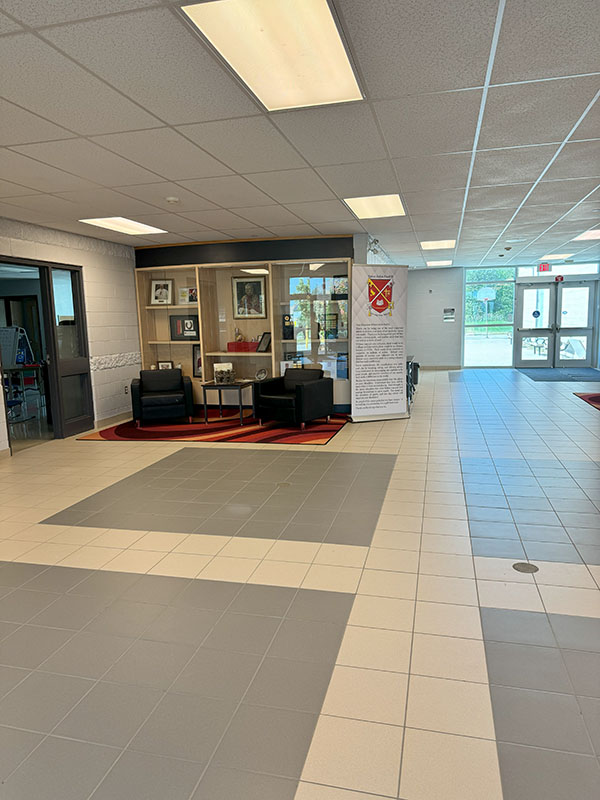
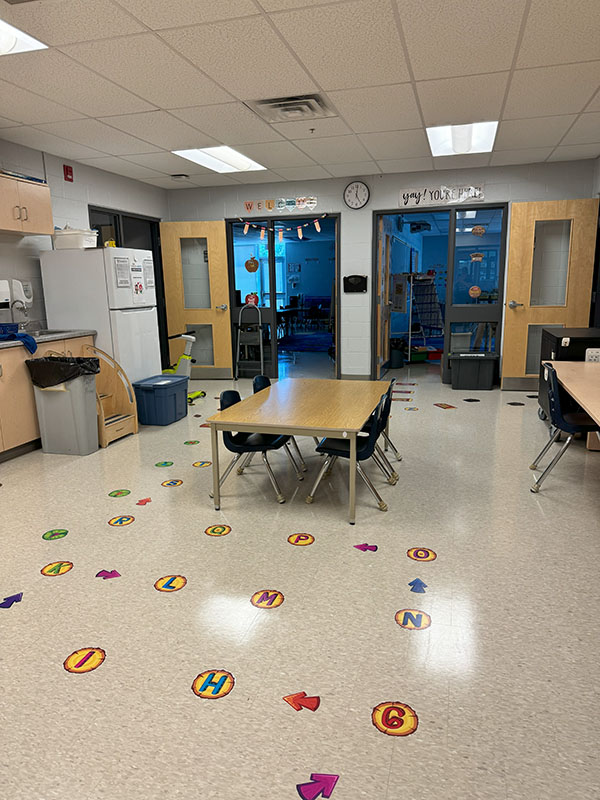
Thank You SJP II Custodial Staff!

A big thank you to our custodial staff for thoroughly cleaning and getting the entire building ready for a new school year!

School Hallway

School Classroom

September 4th, 2024|

Special Message from Director of Education, Tyrone Dowling

Dear Waterloo Catholic Families, 

On behalf of the Waterloo Catholic District School Board, we are thrilled to welcome you and your family to the 2024-25 school year. Whether you are returning or joining us for the first time, we hope you had a wonderful summer and share our excitement for the year ahead. 

We can welcome our students back to school thanks to the dedication and hard work of our Facilities, IT, Human Resources, Catholic Education Centre staff, and your child’s school staff. Their efforts, both behind the scenes and directly with our students, ensure that we can continue providing a quality, inclusive, and faith-based education. 

This year marks the third and final year of our Pastoral Plan and Multi-Year Strategic Plan. Our faith is the foundation of our work, and this year’s pastoral theme, “Ignite,” reminds us that “we are the People of God, discerning our mission to serve, ignited to be pilgrims of Hope.” This is in alignment with the universal Church and Pope Francis, who has declared 2025 to be a Jubilee Year. This is a time of great spiritual and social significance in the Church. The motto of Jubilee 2025 is Pilgrims of Hope. This Jubilee Year is a special time for us to grow in right relationship with God, creation, and with our brothers and sisters.  We look forward to a year of hope and renewal as we ignite our faith in service to our communities. 

To see how our schools are embracing this theme, follow the hashtag #WCDSBignite for updates throughout the year. 

In addition to fostering civility within our schools and ensuring respectful interactions between parents and staff, we remain committed to respecting the “Right to Disconnect from Work” guidelines. These guidelines help set parameters for employees’ availability, promoting a positive shift in our organizational culture. 

Most of you are aware that the Ministry of Education released updates to PPM 170 (School board communication with parents) and PPM 128 (The Provincial Code of Conduct and School Board Codes of Conduct), last spring. To see how WCDSB has incorporated these changes, please review the recently updated Administrative Procedures below: 

  • APC001 (Communication Guidelines) 
  • APC052 (Responsible Use of Information Technology and Electronic Data – Student) 
  • APC018 (Code of Conduct) 

As always, the well-being and learning of our students remain at the heart of everything we do. We are ready to support students and families as they transition into the new school year and beyond. 

Those interested in becoming part of our vibrant school communities can register online. 

We look forward to continuing to nurture a love of learning and teaching across our schools, which proudly reflect a diverse tapestry of races, cultures, ethnicities, and languages. With the unwavering support of families, employees, and community members, we are confident that this will be another #WCDSBawesome year. 

Welcome back! 

Sincerely, 

Tyrone Dowling
Director of Education 

August 29th, 2024|

Extended Day Program Waitlist

As Waterloo Region continues to grow, Waterloo Catholic District School Board (WCDSB) has also seen significant growth. This growth is reflected in our number of kindergarten classes, which have increased from 148 to 153 in the last year alone. Interest in the WCDSB Extended Day program has also been steadily rising, leading to the introduction of a waitlist in January 2024. Due to program capacities and the ongoing shortage of Early Childhood Educators (ECEs), we had to implement caps on our programs in January 2024 and anticipated that the waitlist would remain active into September 2024.

Throughout the registration period, we have been closely monitoring our registration numbers, with the aim of raising caps wherever possible. On August 21, we increased caps in 4 programs, resulting in 52 students getting space in the Extended Day programs.

WCDSB remains committed to working towards increasing program capacity. Over the summer, we hired 24 new ECEs and will continue to actively recruit additional positions.

We will continue to review staffing and programming capacity regularly and raise caps as we can, to meet demand and move students off the waitlist.

For more information, please see our waitlist policy at the link listed below.

Waitlist-Policy-and-Procedures.pdf (wcdsb.ca)

August 27th, 2024|

Links Fore Learning – Silent Auction

As we prepare for the Catholic Community Foundation of Waterloo Region Links Fore Learning 2024 golf event, please see below for a link to our online silent auction.   This aspect of our event is a key contributor to our proceeds, which go directly to our programs that benefit our schools, the parishes and our community partners.

New for this year, the online auction will not close with the end of the golf tournament, we will close the online auction on Monday August 26th; and for those in attendance for golf or lunch, there will still be a small selection of items to bid on exclusively at the golf course.

It is our belief that this format will provide our community partners and supporters who may not be able to attend the golf tournament with a great opportunity to support us.

Items may be previewed at the moment now with the auction opening August 14th at noon.  Please check daily as we will continue to add items donated by our sponsors.

Link to auction:  https://www.32auctions.com/LFL2024

Link to Event:  Links fore Learning 2024 | Catholic Community Foundation of Waterloo Region (ccfowr.ca)  – Golfers are always welcome!!

Thank you!

Links Fore Learning Committee
Catholic Community Foundation of Waterloo Region

August 12th, 2024|

Grand River Transit launches Business Plan consultations on EngageWR

Grand River Transit is mapping out the next five years of transit service investments, as it responds to unprecedented ridership in the fastest growing community in Canada.

Across the Region, community feedback will be gathered to inform GRT’s Conventional Bus and ION Train Business Plan, MobilityPLUS Business Plan and Township Transit Strategy.

Together, the plans will be the roadmap to guide transit service expansion and investments from 2025 to 2030. The plans will focus on how to make transit easier to use, where and when GRT can serve the community better, and how and where GRT should prioritize frequency and speed.

Share your feedback on EngageWR!

  • Map your ideas for all three plans using the map tool
  • Share your feedback by filling out current and future surveys
  • Ask any questions using the Q+A tool
  • Subscribe to the project page for updates about all three plans as we will add more details on upcoming engagement opportunities.

For more information, visit grt.ca/2025, EngageWR, or e-mail grtinfo@regionofwaterloo.ca.

July 22nd, 2024|
Go to Top